

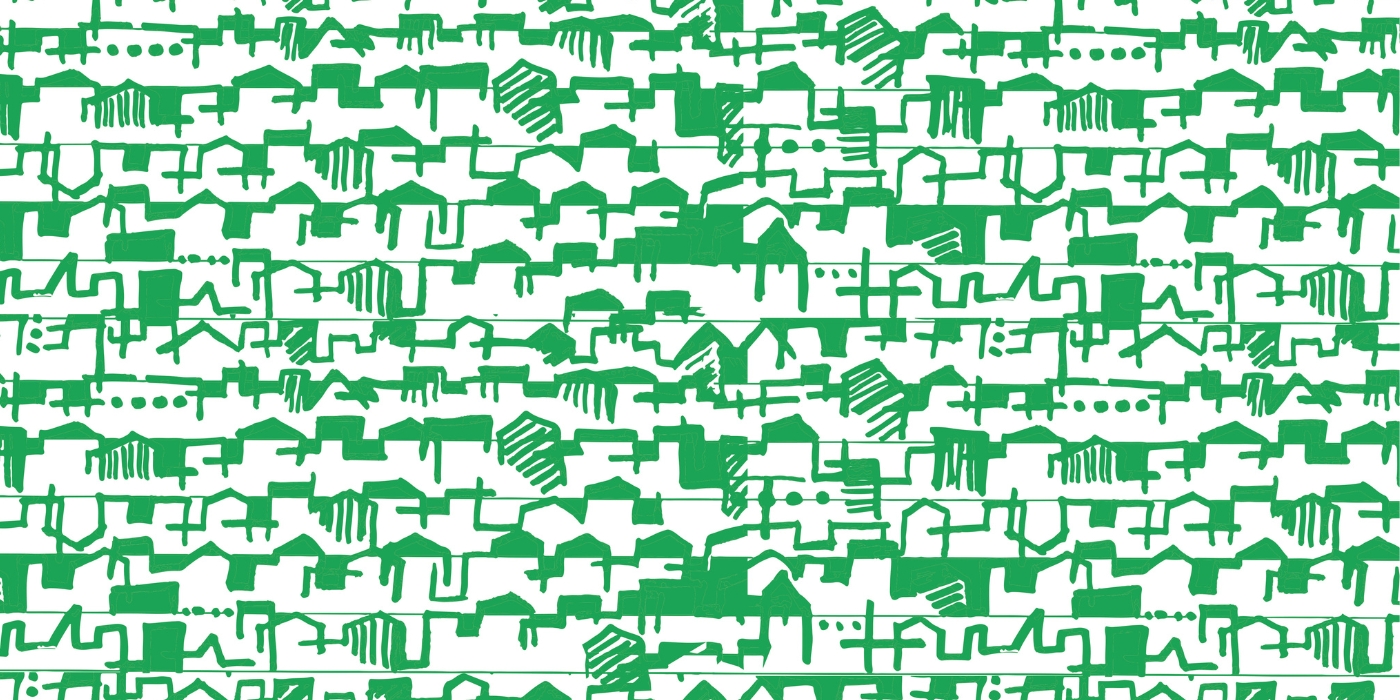
This week we caught up with local illustrator and surface pattern designer Diana Phiri-Witty. Diana’s designs are inspired by architecture and place, and by her Southern African heritage. With a collaborative approach rooted in people and community, we wanted to find out more about her process.
Croydonist: First of all, Croydon native or Croydon convert, and what area do you call home?
Diana: I am a Croydon convert. I moved here 11 years ago as a newlywed after we found the loveliest flat just off Surrey Street with beautiful interiors. We were there for an incredible eight years before moving to beautiful Park Hill to start a family.
Croydonist: You’re an illustrator and surface pattern designer. How did you get to where you are today?
Diana: I was born and raised in Malawi and I’ve always loved art and design, but I wasn’t confident I could make a career out of it. I settled on architecture because it had creative elements alongside what I assumed would be a guaranteed 9–5. The recession taught me otherwise and I had to pivot.
I did five years of education and while I am not a practising architect I don’t regret studying it because it taught me how to design and led me into several architecture adjacent fields and to my passion which is community and stakeholder engagement. Following university I have worked as an architectural assistant, urban designer design coordinator, regeneration manager, planner and now I am a project manager for the NHS. All of these experiences have shaped my work and I am lucky in some cases to find opportunities to use my illustration skills in my job but mostly I deliver commissions outside my day job.
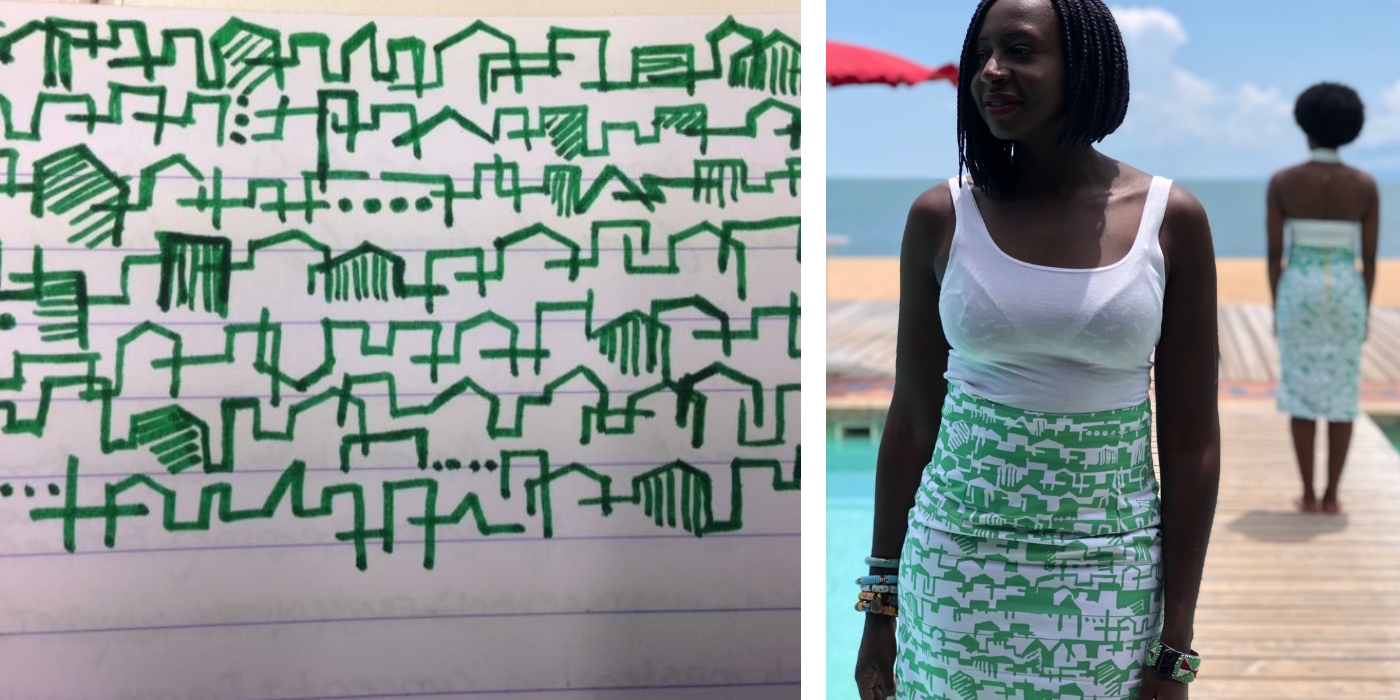
I first took a leap into illustration while working in a role where we had long project meetings. I started doodling around the edges of my notes in the meetings. Those doodles turned into surface pattern designs and that’s really where it took off. I started drawing for myself for fabric and clothes and selling some of it to friends. I realised that when I draw and doodle I really enjoy being in that creative space and I started doing it more confidently.
My base is illustration but I apply it across surface pattern design textiles and public spaces. My heritage plays a big role in my work and my favourite designs are those that come from incorporating diverse voices. I absolutely love working on projects that are shaped by the people that will consume, wear, use or live in the project space.
Croydonist: Where do you create your work?
Diana: Mostly I find a cosy quiet corner at home and create. Nothing too exciting.
Although sometimes because of having children working full time and during my pregnancy I drew while on the tube, on the train or even in the pregnancy day assessment unit or triage at Croydon University Hospital. I am accustomed to creating on the go!
Croydonist: What’s been your most challenging commission?
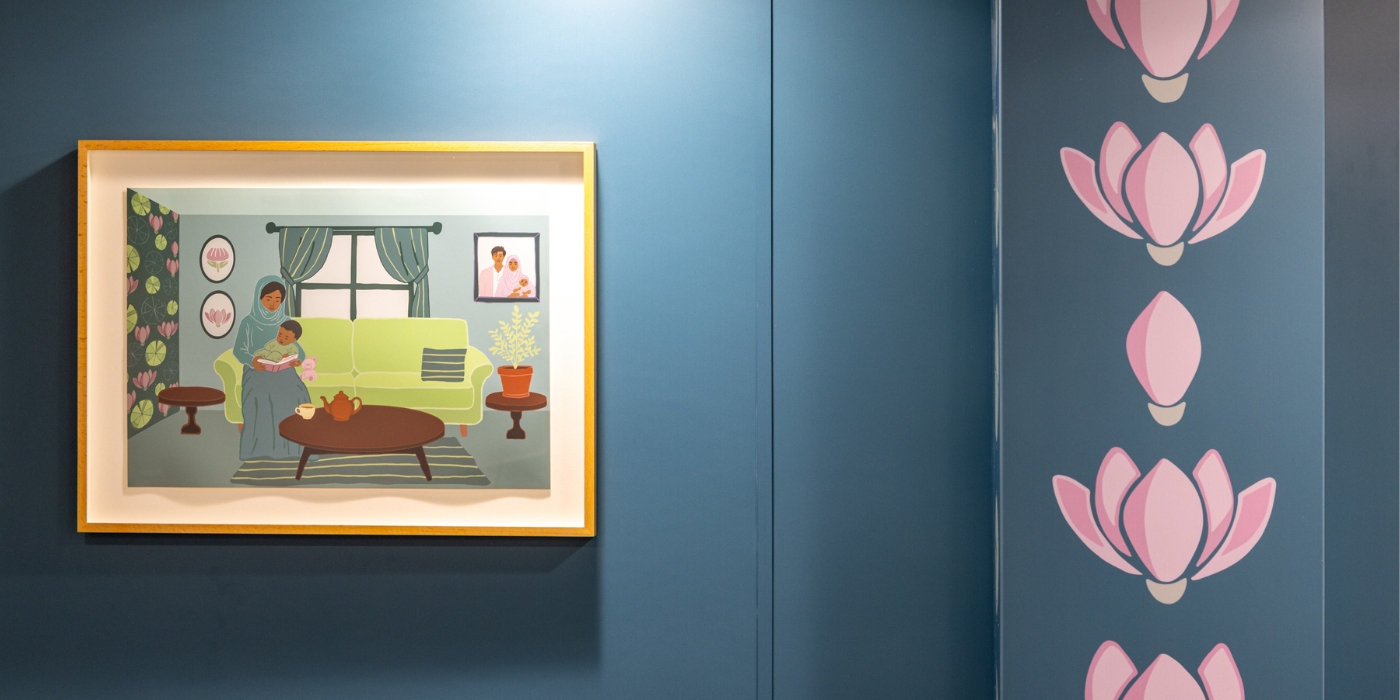
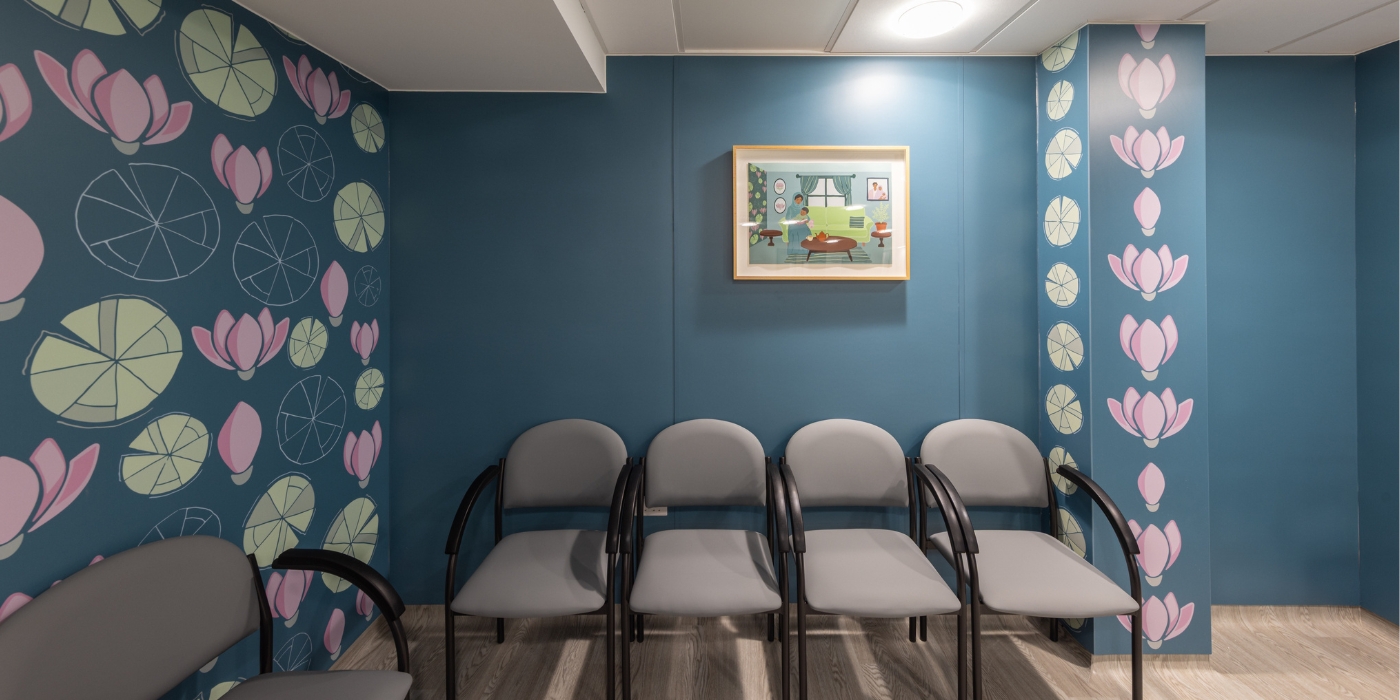
Diana: One of my most recent commissions was for the NHS Barts Health Trust and it required a great deal of learning from doctors, consultants and radiographers. I created surface patterns for the interior of a Community Diagnostic Centre and had to learn about the perception of patients with different needs including those living with dementia and how to create a low anxiety space.
The brief was to give the hospital setting a feeling of home. I did a great deal of research about the local area and incorporated learning from engagement to achieve the final pieces.
Croydonist: What’s been your most joyful commission?
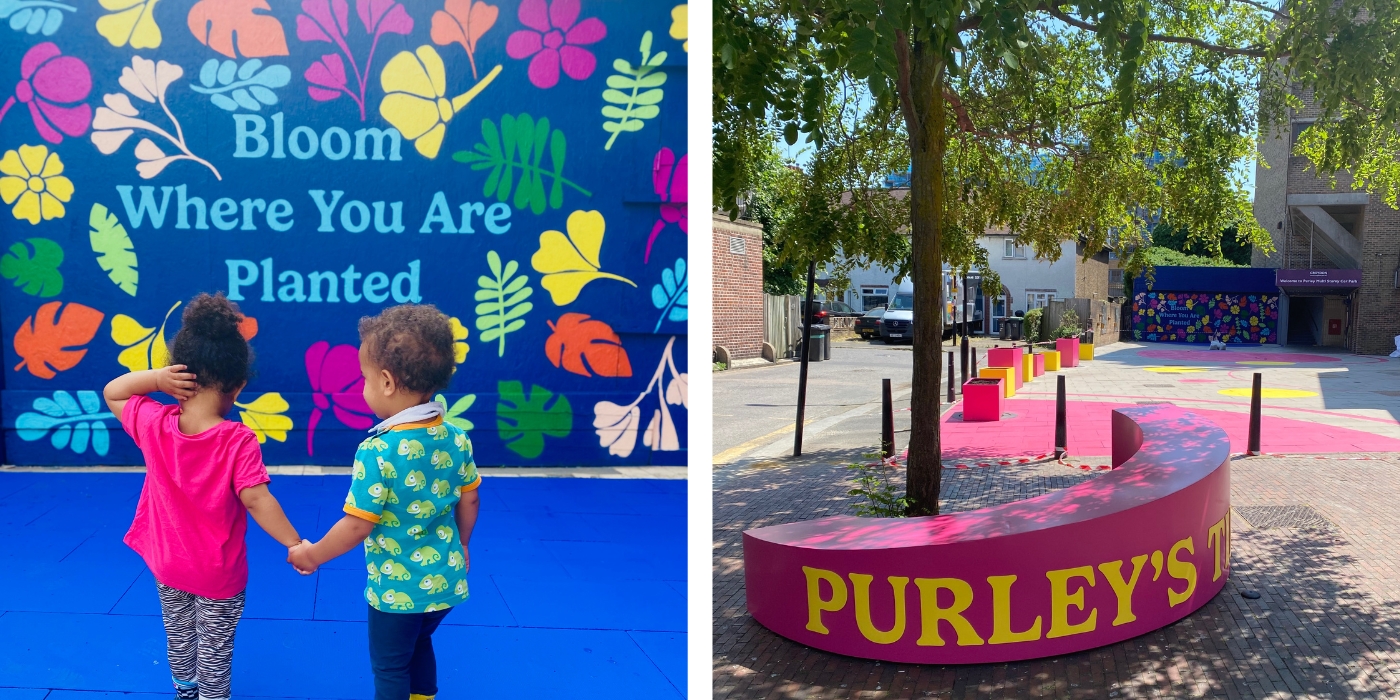
Diana: By far the most joyful work I did was in Purley. I worked for a company called Urban Symbiotics that had won a commission to deliver improvements across Purley town centre and I led on the project.
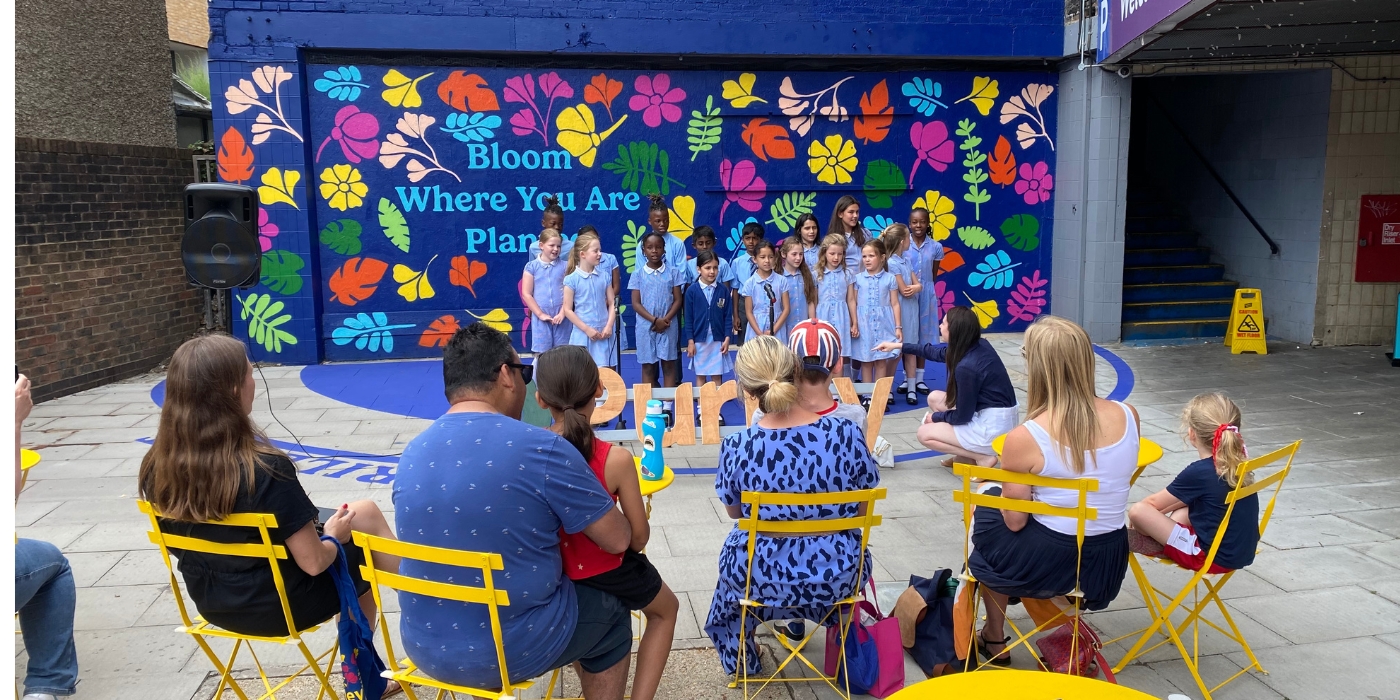
I worked with the Purley BID, local residents, young people, religious groups and older people to turn a space that was being used as an illegal carpark into a vibrant community square complete with seating.
I designed a mural on the walls, designs on the floors and incorporated bright colours throughout, and even designed a custom metal furniture piece. It was playful and vibrant and is my favourite design. It turned my illustration into three dimensional playful elements and we had a wonderful opening event to celebrate the project.
Croydonist: How long does a piece typically take you?
Diana: Client timelines vary. I prefer to take on projects with a community and stakeholder engagement and these require community input. In these cases developing a piece can take one to two months to allow for workshops, design feedback and redesign based on feedback.
In cases where there is no engagement required a piece can take two weeks. I often need time to research the area, get to know the wider context of the project and deliver something unique.
Croydonist: What’s your process?
Diana: Research research research. I like to know the context. Who am I designing for? How will they use it? What historic or cultural influences can be drawn from and what can I learn from people that will view it? What are they passionate about, what gets them excited and what would they like to celebrate?
I then get on my iPad or into my sketch book and start to draw. If the timeline is short I go straight to digital.
Croydonist: Tell us about your most recent commission.
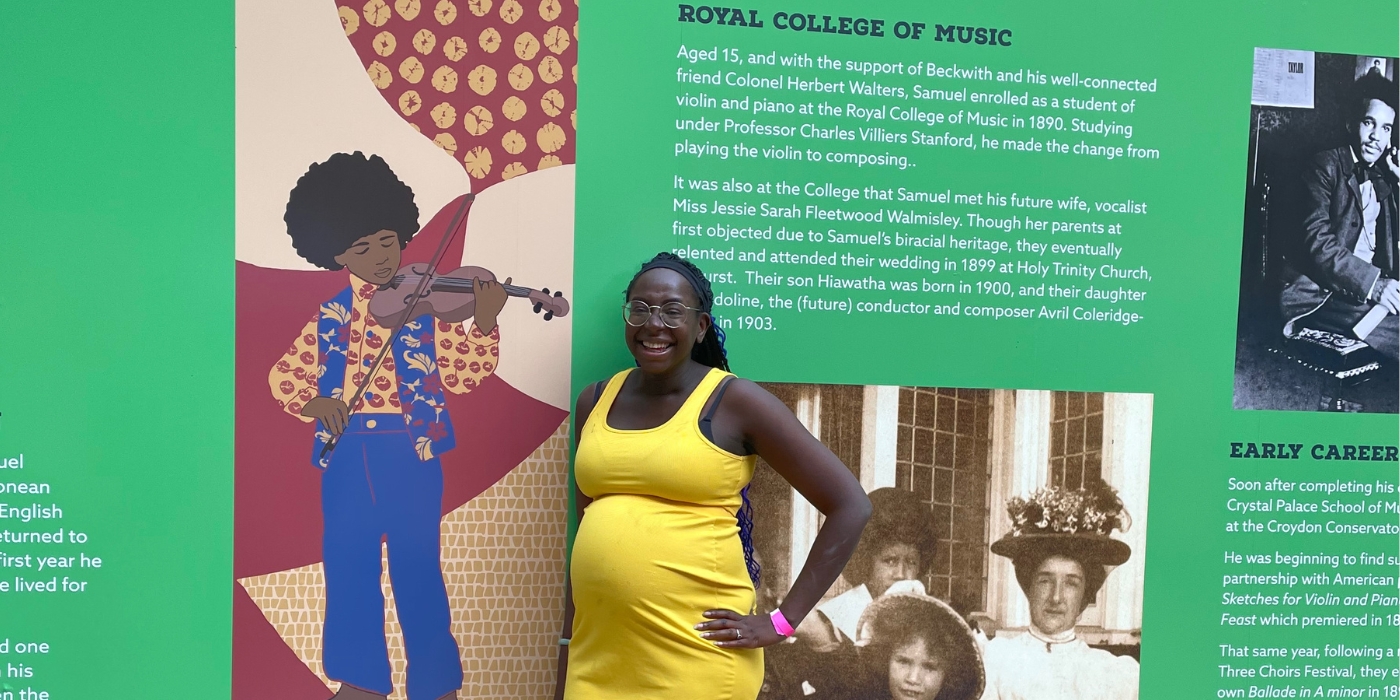
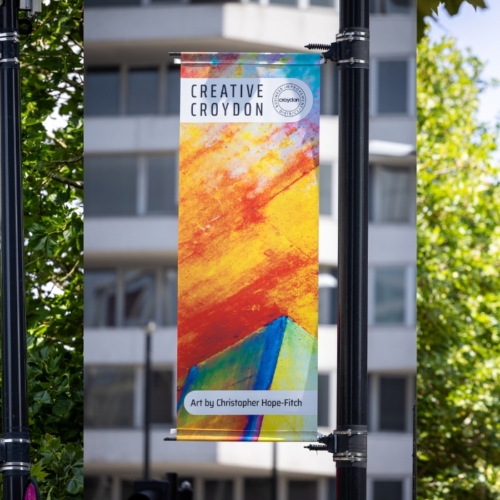
Diana: My most recent commission was for Croydon Council as part of a celebration of Samuel Coleridge-Taylor which saw a number of artists selected to contribute designs for street banners across the borough.
My piece reflects on Coleridge-Taylor’s dual heritage Sierra Leonean and British and his childhood in Croydon where he was often asked to play the violin at school events. His music, shaped by both African and European traditions shows how powerful identity and creativity can be.
The artwork uses patterns drawn from Sierra Leonean tie dye and Victorian design bringing together bold colours and patterns. The piece is a tribute to his journey from boyhood to world renowned composer and a wider reflection on how art and music can cross boundaries of race, class and background.
Croydonist: Classic interview question – if you had to invite three creatives to a drinks party who would they be?
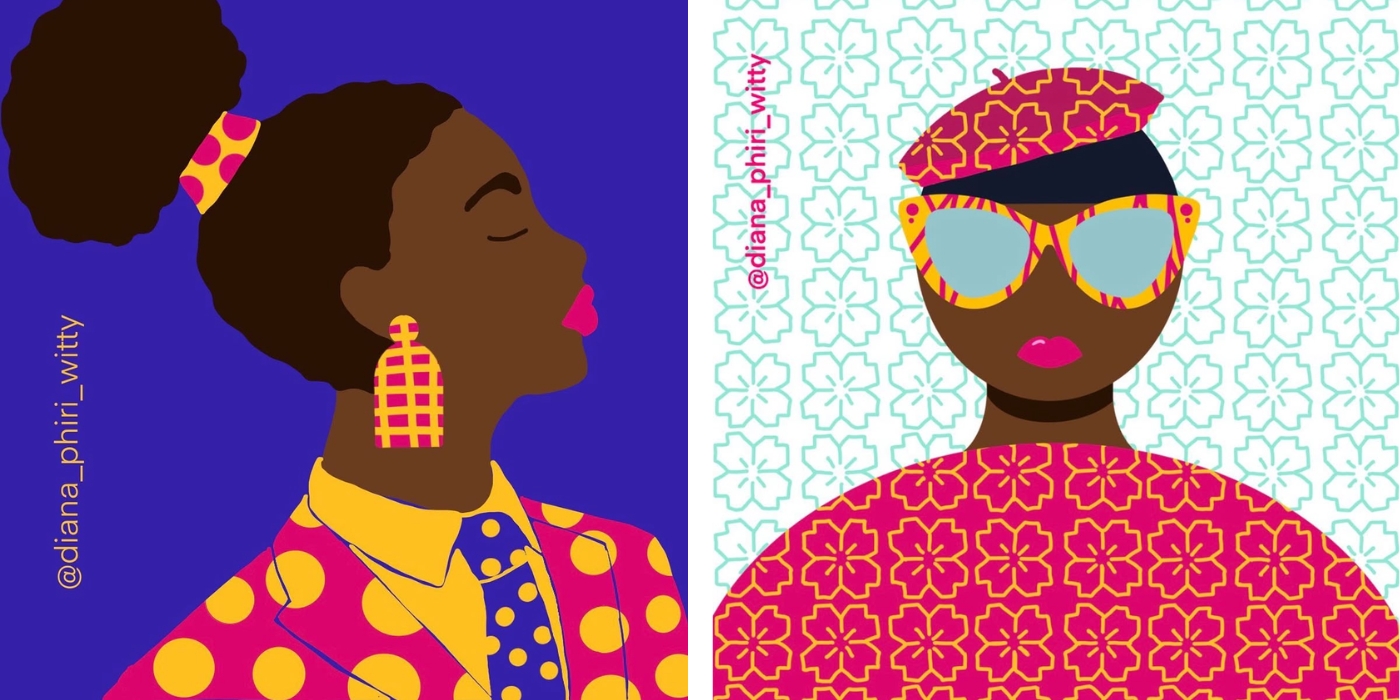
Diana: Esther Mahlangu is such an inspiration to me. She creates work inspired by her Ndebele heritage. I am of Malawian Zimbabwean and South African heritage and I love the symbols, colours and patterns from my culture. The majority of my surface pattern work is inspired in this way and I would love to talk to Esther about heritage symbolism and storytelling.
Second is Keith Haring. I love the boldness of his work, the colours, the lines and the symbols all inspire me. There is such joy and freedom in his patterns. I aspire to create with that freedom but I tend to overthink and I would love to talk to him about letting go and just drawing.
Finally, Japanese architect Tadao Ando. His work is minimalist, lots of straight lines and concrete but I love it. I love his use of shadows and light. I think there is room for me to appreciate the busy bold and colourful as well as the beautifully minimal. I think that reflects my personality and therefore my art inspired by architecture with a mix of my African heritage, sometimes bold and untethered and sometimes minimal and restrained.
Croydonist: What’s next for you this year workwise?
Diana: I hope to continue delivering commissions. My dream would be to get more work in interiors and outdoor public spaces. With a newborn and going back to work later this year I will navigate what I do carefully.
Croydonist: And finally, favourite spot in Croydon for inspiration?
Diana: Park Hill and Lloyd Park. I love how they offer me a view to Croydon’s iconic architecture whilst being in a beautiful park setting.
The cherry blossoms in Park Hill in Spring against Croydon’s high rises are a reflection of soft and hard. I love that about Croydon.
Thank you to Diana for chatting with us. Follow her work on Instagram.
All images courtesy of Diana Phiri Witty – Barts Health Trust project photos by Matt Livey.
Posted by Julia

No Comments