

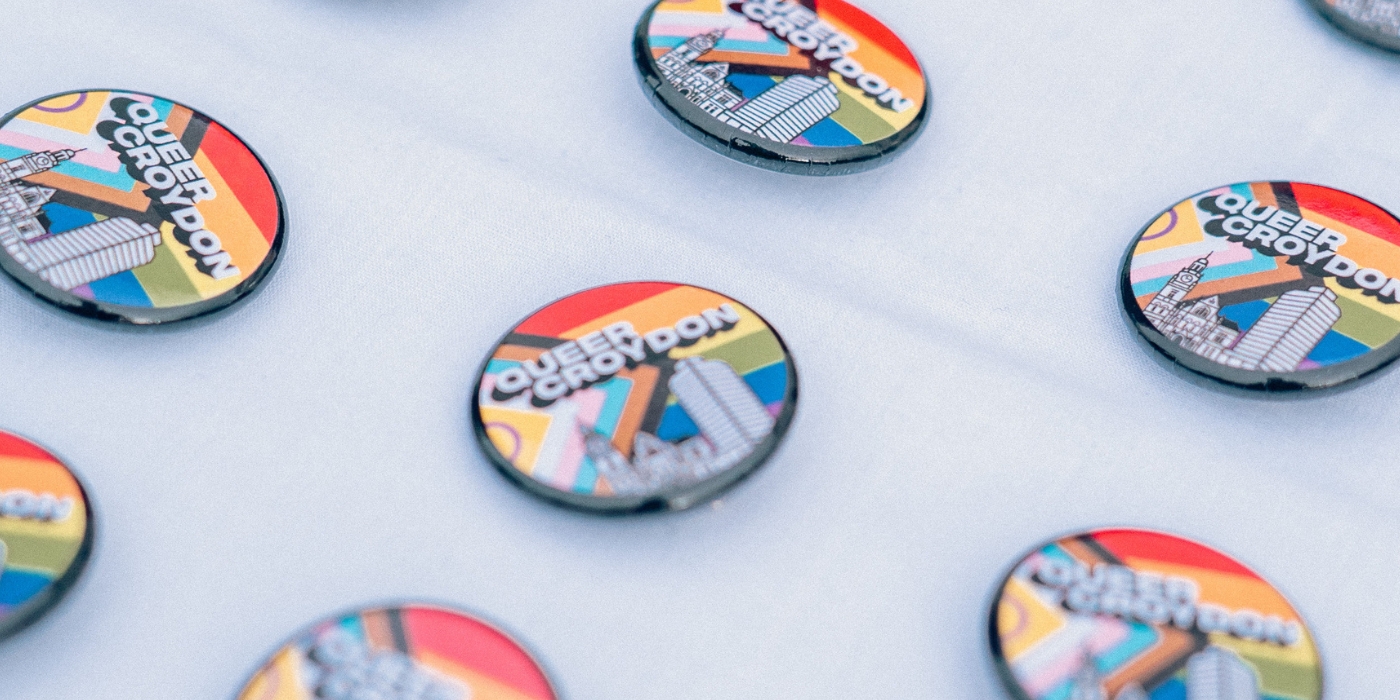
February is of course LGBT+ History Month – an annual, month-long celebration which shines a light on the lives, achievements, and rights of queer people across the UK. For last year’s history month we were involved in bringing to life the exhibition Liberating Love, which took place in the town centre, and looked at ‘Pride Through Resilience and Activism’ in our borough. This year, we’ve been immersed in other projects but we wanted to find out more about local LGBT+ HIstory Month events. Who better to have a chat with than chair of Queer Croydon, Claudia Golder-Coelho, to hear what’s in store…
Croydonist: First of all, for readers who may be new to Queer Croydon, how would you describe what you do – and the gap you’re trying to fill locally?
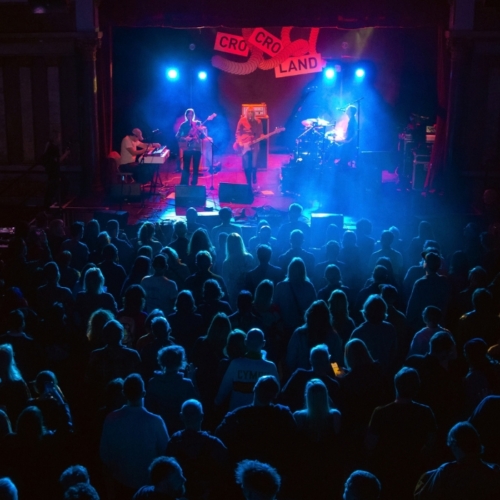
Claudia: Queer Croydon is a grassroots LGBTQ+ community organisation rooted in Croydon and neighbouring South London. We began in 2022 with Their Majesties – a free, monthly drag cabaret and queer performance night – at a time when there were very few consistent, visible LGBTQ+ spaces locally.
What started as performance-led safe space quickly grew into something bigger. We saw first-hand that people weren’t just coming for a show – they were coming for connection, consistency and community. That evolution is captured in our guiding principle: “Culture became community and it turned into responsibility.”
Today, Queer Croydon delivers a range of free, accessible programmes shaped directly by lived experience. These include Creative Wellness Meetups, Trans Youth Support & Mentoring (18–25), practical Community Programme workshops, and monthly Community Check-Ins hosted across Croydon libraries.
The gap we address is simple but vital: consistent, welcoming LGBTQ+ space in a borough where isolation is common and services are stretched or simply not there. Everything we do is for us, by us – focused on combating isolation, fostering belonging, and making queer people feel rooted in their community.
Croydonist: What does LGBT+ History Month mean to Queer Croydon?
Claudia: For Queer Croydon, LGBT+ History Month is about community ownership of our stories. It’s not only about landmark moments or well-known figures – it’s about everyday queer lives, relationships, resistance and joy.
In the current political climate, it’s also an act of affirmation. Queer and trans communities are facing increasing hostility, with hard-won rights – particularly for trans people – being openly challenged. History Month becomes a moment to say: we are here, we have always been here, and we are not going anywhere.
It’s a time to honour those who came before us, recognise how far we’ve come, and refocus our energy on protecting the rights and spaces our communities still need.
Croydonist: Why is it important to explore and celebrate queer history here in Croydon?
Claudia: Croydon has a rich but often overlooked queer history – one that lives in people, places and memories rather than plaques or textbooks. Exploring queer history here helps challenge the idea that LGBTQ+ life only exists in central London or specific cultural hubs.
Rooting queer history in Croydon helps people feel seen where they live. It affirms local identity, builds pride, and reminds us that queer community has always existed here – even when it wasn’t visible or formally recognised.
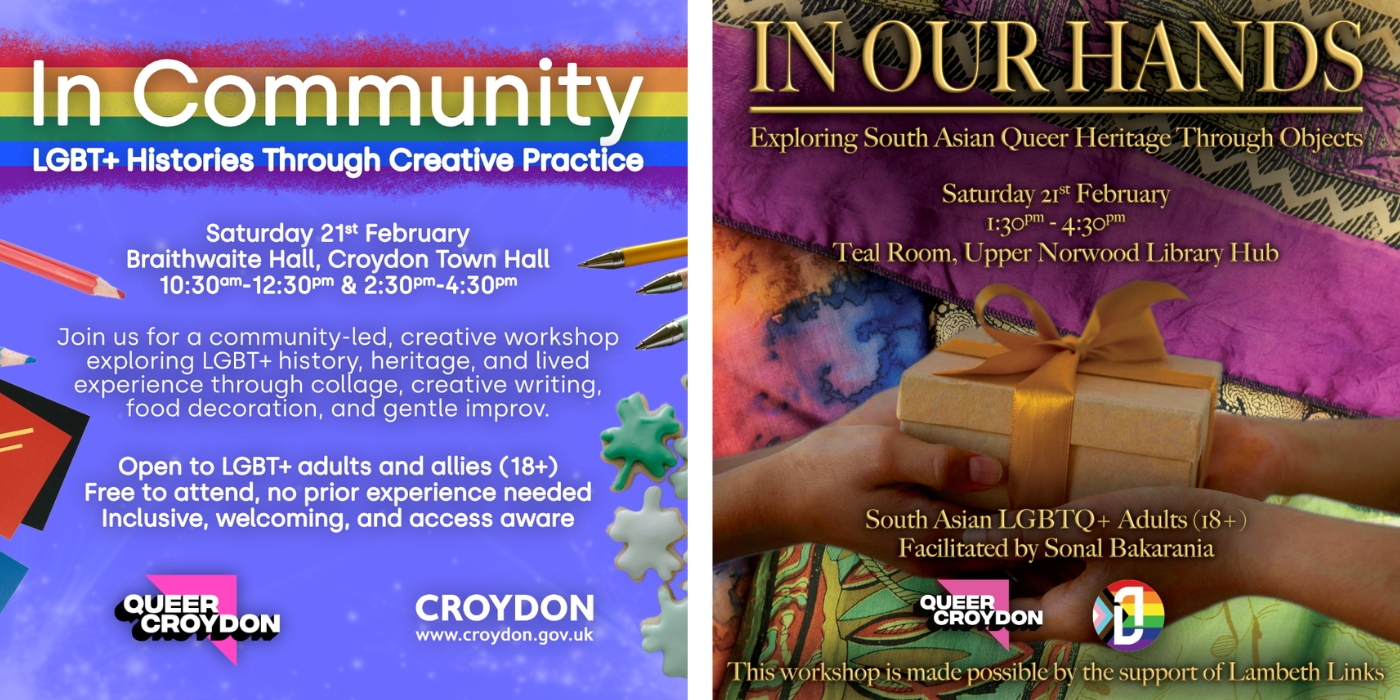
Croydonist: We hear 21 February is your Super Saturday! Can you tell us more about ‘In Community: LGBT+ Histories Through Creative Practice’ taking place at Braithwaite Hall?
Claudia: In Community: LGBT+ Histories Through Creative Practice takes place on Saturday 21 February at Braithwaite Hall, Croydon Town Hall, as part of Croydon Council’s LGBT+ History Month programme.
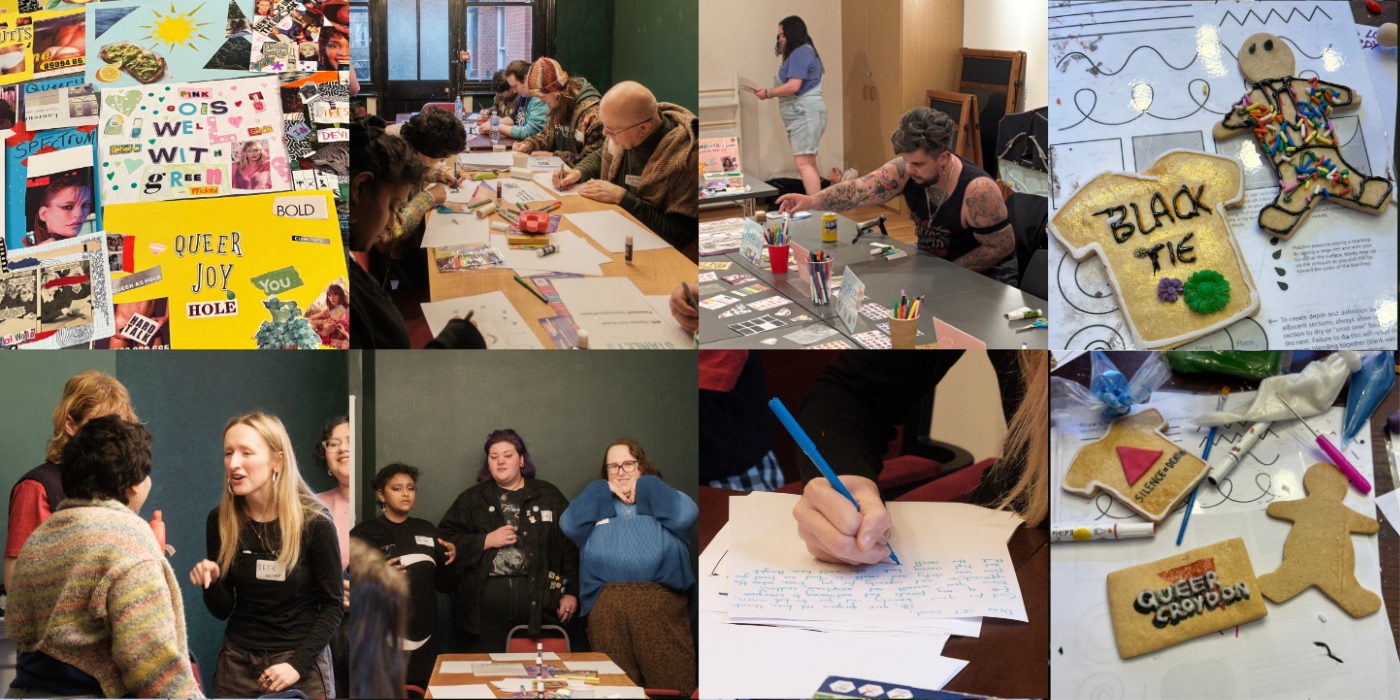
The workshop is open to LGBTQ+ adults and allies (18+) and offers a relaxed, participatory way to explore queer history through creativity rather than lectures or panels. Participants move through four creative stations – collage, creative writing, food-based making and gentle improvisation – before coming together for collective reflection.
At its heart, the session is about being in community: learning together, sharing lived experience, and leaving feeling connected, affirmed and empowered.
Croydonist: Why does creative practice feel like such a powerful way to explore LGBTQ+ histories and lived experience?
Claudia: Creative practice allows people to approach history emotionally and relationally, not just intellectually. Many queer stories were never formally recorded – they were passed down through memory, creativity, care and community.
By making, writing and playing together, participants can process their own experiences while recognising how they connect to others. Creativity offers permission to explore identity, trauma and joy without needing the “right words” – it creates space for honesty, vulnerability and collective understanding.
Croydonist: Who are the facilitators running the creative workshops?
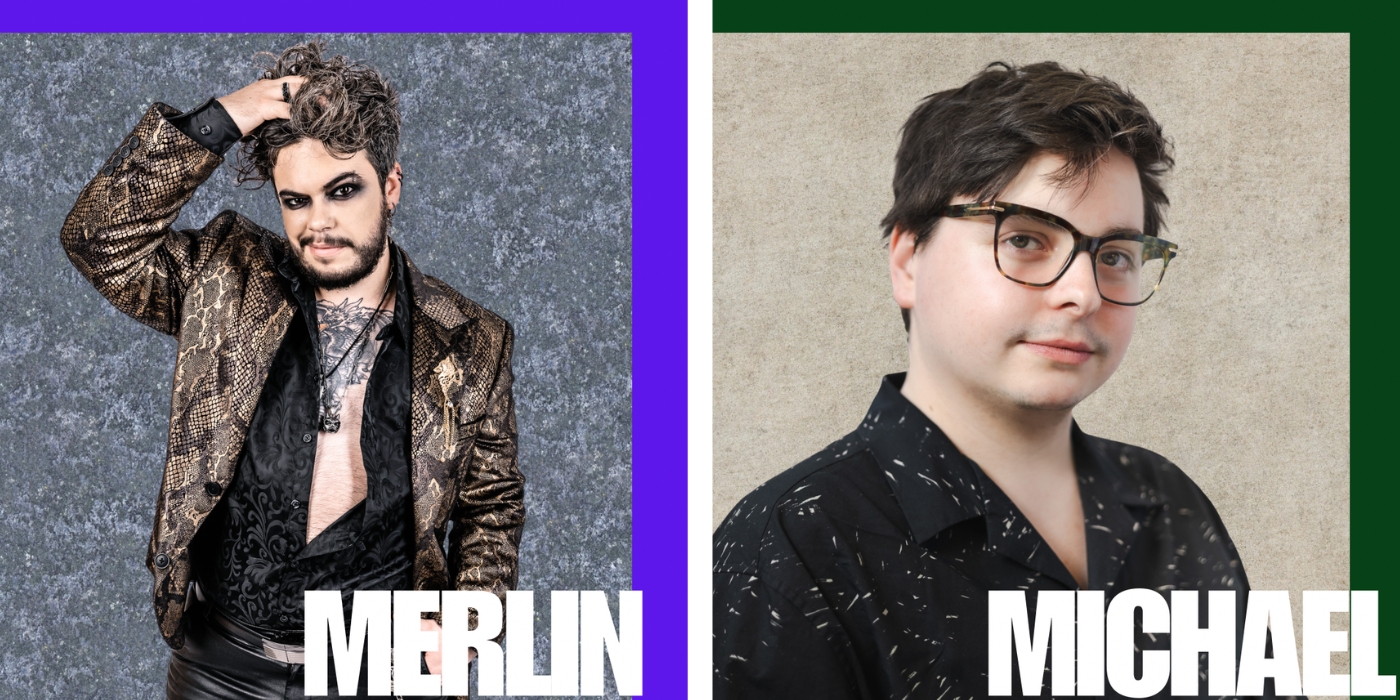
Claudia: The workshops are facilitated by members of Queer Croydon’s Executive Committee, all of whom bring lived experience into their practice:
Merlin Golder-Coelho (he/him) – Social Media Lead
Facilitating food-based creative making, exploring presence, visibility and memory through recipes, tradition and shared nourishment – focusing on how food connects queer lives to family, culture and survival.
Michael Dare (they/them) – Secretary
Leading collage, centred on lived experience as heritage and the everyday stories we carry.
Sabiyha Rasheed (they/them) – Content Lead
Facilitating creative writing and storytelling, exploring language, memory and imagined queer futures.
Joel Aston (they/them) – Communities Project Coordinator
Leading gentle roleplay and improvisation, exploring queer achievement, resistance and joy.

Croydonist: You’re also part of the collaborative project ‘In Our Hands’ at Upper Norwood Library Hub that afternoon – we’d love to find out more about this one too.
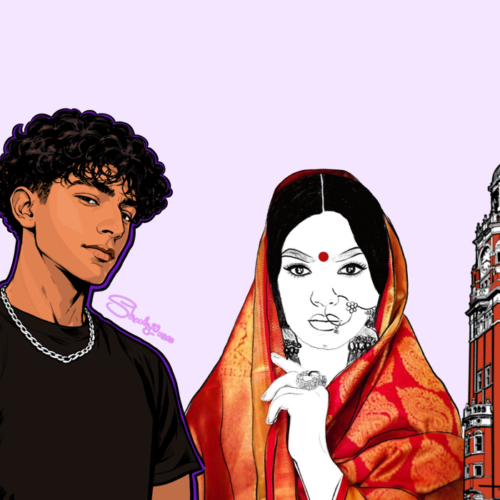
Claudia: In Our Hands: Exploring South Asian Queer Heritage Through Objects takes place on the afternoon of 21 February at Upper Norwood Library Hub, made possible with the support of Lambeth Links, an LGBTQ+ organisation based in Lambeth.
The workshop is facilitated by Sonal Bakarania (she/her) – Queer Croydon’s Heritage Lead and Counsellor – and invites South Asian LGBTQ+ adults to explore heritage through personal objects, memory and storytelling. It complements the morning event by centring specific community experiences within the wider History Month programme.
Croydonist: It’s a busy month, with Creative Wellness, Community Programme sessions and community check-ins running alongside History Month. Can you tell our readers more about these?
Claudia: Alongside LGBT+ History Month, Queer Croydon runs several ongoing programmes:
- Creative Wellness Meetups and Trans Youth Support & Mentoring (18–25), made possible by the Croydon Loves You Fund 2025–26 with support from Croydon Council
- Community Programme workshops – including yoga, self-defence, CV writing and life-skills sessions – funded by the National Lottery Community Fund
- Monthly Community Check-Ins, hosted across Croydon libraries in partnership with Croydon Libraries and also funded by the National Lottery Community Fund
These relaxed sessions centre a theme each month and create space for connection and conversation. The next takes place on 20 February at Ashburton Library.
We’ve also launched a Board Game Social at Wandle Park Arts Café (15 February), and Their Majesties, our monthly queer performance safe space, celebrates its fourth birthday on 26 February – marking the event that sparked Queer Croydon’s journey.
Croydonist: You’ve also been visible in wider community spaces recently – can you tell us more about that work?
Claudia: We’ve been proud to take Queer Croydon into spaces beyond traditional LGBTQ+ venues – because inclusion only truly works when queer people are visible and welcomed in everyday community life.
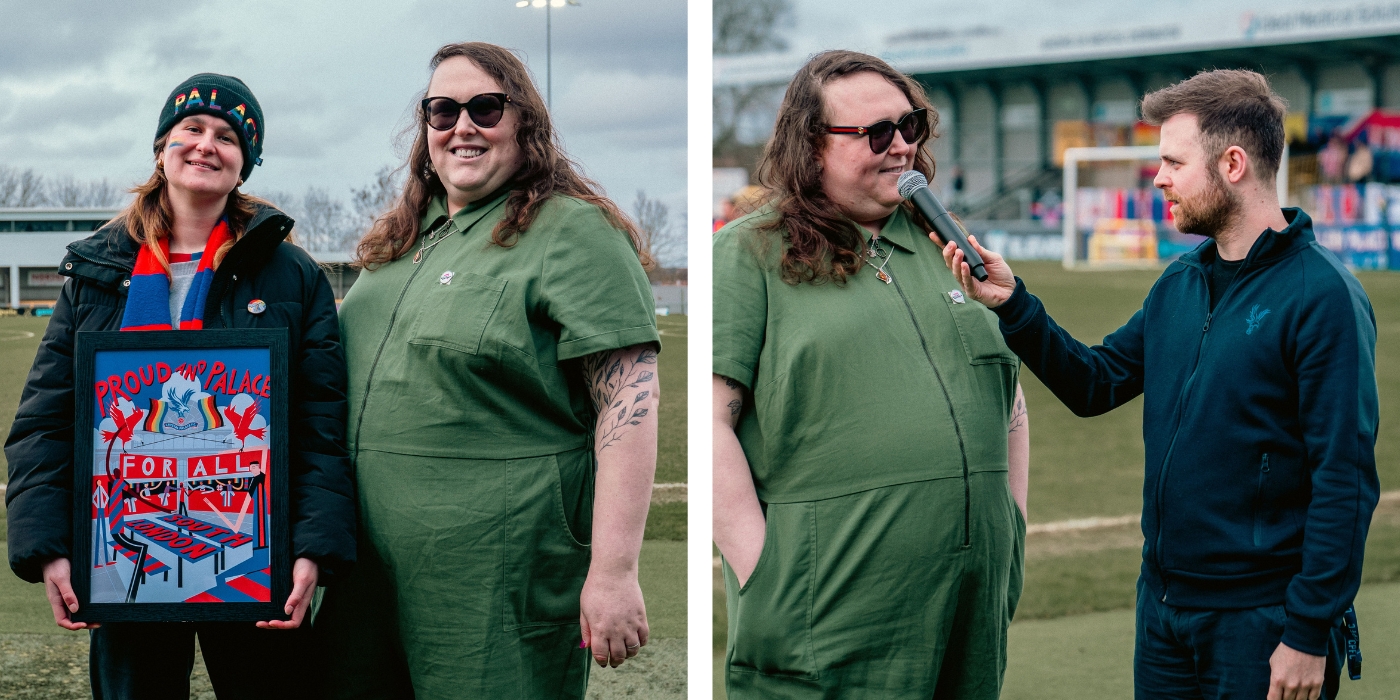
Recently, we were invited to hold a stall and speak at half-time at Crystal Palace Women’s FC, engaging fans, families and new audiences while sharing the importance of LGBTQ+ inclusion in sport. The response was incredibly positive and showed just how powerful it can be to meet people where they already are.
This work is about normalising queer presence, building bridges, and ensuring LGBTQ+ people aren’t pushed into the margins of community life – whether in libraries, sports spaces, cultural venues or council-led programmes.
Croydonist: Advocacy seems central to your work – what does that look like in practice?
Claudia: Advocacy at Queer Croydon is practical and community-led. We’ve adopted the RADAR Key scheme, providing free keys to trans and disabled people so they can safely access accessible toilets across Croydon. While our focus is local, we’ve sent keys UK-wide due to demand – over 1600 keys so far.
We’re active in national advocacy, including signing the Protect Inclusion coalition letter calling on MPs to uphold trans-inclusive protections under the Equality Act.
We also offer free counselling, prioritising trans and LGBTQ+ people, and are developing an anti-hate policy focused on transphobia, supported by Protection Approaches, in response to increasing hostility towards trans communities.
Croydonist: Finally, looking ahead, what do you hope people take away from spending time with Queer Croydon in 2026?
Claudia: We hope people leave feeling less alone. That they feel grounded, affirmed and connected – and reminded that community is something we actively build together.
In a time of increasing hostility, Queer Croydon exists to reaffirm our humanity, celebrate our joy, and create space for queer people not just to survive – but to belong.
Hear hear. Thank you to Claudia for chatting with us. Find out more about Queer Croydon’s events on their website and Instagram, and put 21 February (a.k.a. Super Saturday) in your diaries.
Images courtesy of Queer Croydon
Posted by Julia

No Comments