

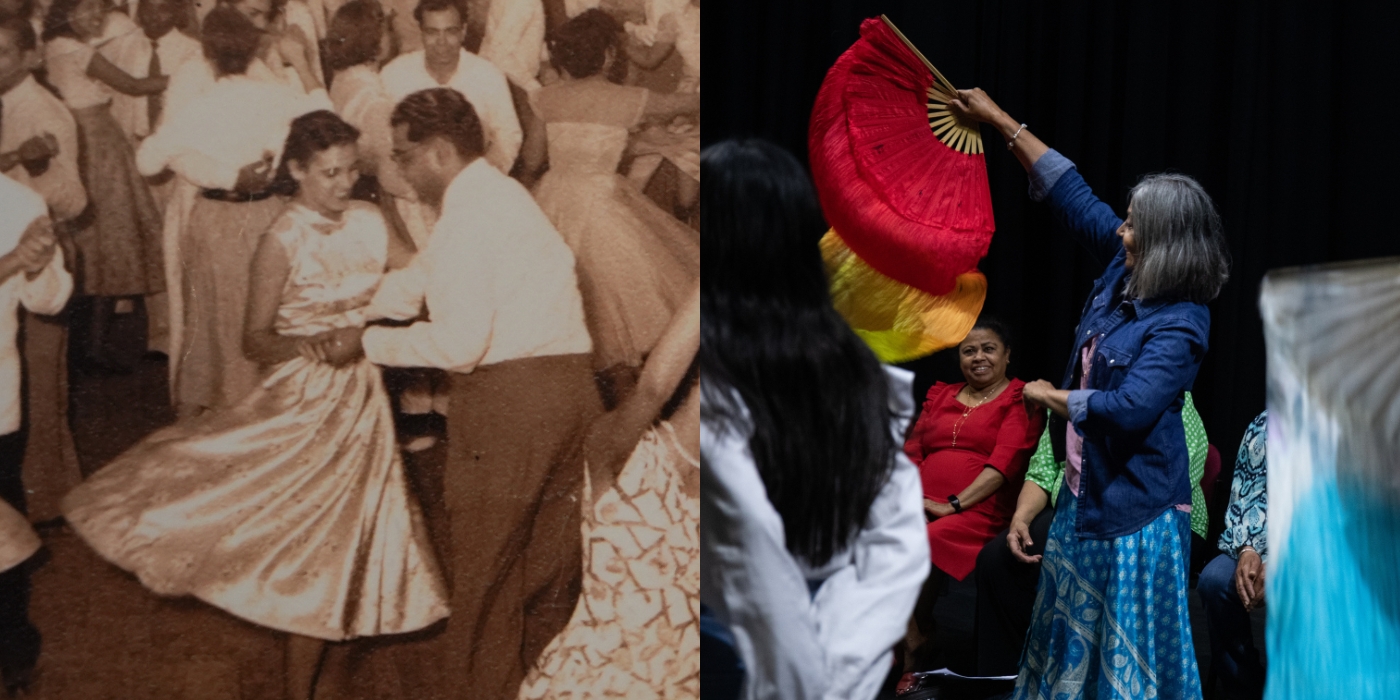
You may remember the Routes to Roots exhibition that took place at the Museum of Croydon in 2024, which documented the stories of Anglo-Indian and South Asian communities’ who migrated to the UK (and more specifically Croydon, Sheffield and Bradford) after the Second World War.
The short documentary film ‘Routes to Roots: 1960s Croydon’ which was part of the exhibition has now been selected to be part of the London Independent Film Festival, and will be presented this Friday, 17 April, at Genesis Cinema In Whitechapel.
We caught up with Maya Productions artistic director Suzanne Gorman, who leads the Routes to Roots project, along with the film’s director Natalie Sloan, and one of the participants, Sharon Owen, to find out more.
Croydonist: The Routes to Roots documentary was first shown as part of the exhibition in Croydon – how has it evolved into a film now screening at the London Independent Film Festival, and what does that wider platform mean to you?
Suzanne: It was very special to hold the premiere of the film at the Museum of Croydon in 2024 as part of our Routes to Roots: A South Asian Heritage exhibition, and so valuable to share it with thousands of visitors in Croydon. Whilst the film centres on Croydon at a particular time, the stories and experiences that are shared do have a wider resonance. The film was made as part of our wider Routes to Roots programme that works with South Asian communities in Bradford and Sheffield, as well as Croydon, to explore themes of migration, cultural identity and heritage. We always hoped that the film would reach an audience outside of Croydon, so we were really pleased to be selected for the London Independent Film Festival.

Croydonist: The film focuses on Anglo-Indian and South Asian women in 1960s Croydon – what felt important about telling those particular stories at this moment in time?
Suzanne: At this moment in time, migration is being used as a political football, particularly as a way to divide communities and pit people against each other. This film offers a much-needed alternative narrative. It shows how individuals, Anglo-Indians, and South Asian communities have migrated to the UK, settled, built lives, and fully contributed to this society. It gives first-hand accounts of life as a South Asian migrant in the 1960s. These stories are rarely seen and heard; this is a piece of living history.

Croydonist: You’ve spoken before about these histories being underrepresented – what did you learn from the women you interviewed that challenged your own assumptions?
Suzanne: One of the key things I learnt was about strength and resilience. I don’t think people often recognise what it means to leave your whole life behind in a country and settle elsewhere. It takes courage, tenacity and determination. I was really impressed with how the women in our film and in our wider Routes to Roots group took the challenges they faced in stride, worked through the obstacles, and still met life with a positive outlook.

Croydonist: Croydon is more than just a backdrop here – how did the borough shape the stories that emerged, and do you think audiences outside Croydon will connect to that sense of place?
Sharon: Many of the women in the group are Anglo-Indian; a very small group of people worldwide who migrated to only a few areas, Croydon being one. In the 60’s, Croydon was at the start of a period of growth as a commercial and cultural hub in South London and provided a springboard for their fast and flexible integration into the community, work and life. Stories about that process, coupled with hearing about the lives they left behind, could help audiences from anywhere connect with the positivity and energy of migrants in general who have to adapt fast to new ways.

Croydonist: The film weaves together archive footage with personal testimonies – how did you approach balancing those two, and were there any moments that particularly stayed with you?
Natalie: One of the challenges we encountered on this South Asian heritage project was the lack of representation of South Asian lives in UK archives, so working with participants became essential. When we reached out to the Croydon community, one contributor, Mary, shared a beautiful collection of home video footage, including dances and family occasions, which became a very special part of the film.
There was also a particularly memorable moment. We found a lovely piece of archive footage that opens the film: a 1963 celebration showing a mixed group of Londoners dancing together. When we screened it one participant recognised it as her brother’s 21st birthday. She had never seen the footage before, and even her mother appears in it. It was an incredibly moving moment and captured what the film is about, connecting personal histories with a wider social story.

Croydonist: The wider Routes to Roots project has involved participants aged 11 to 85 – have you seen any shifts in how different generations understand or relate to these migration stories?
Suzanne: The project has definitely opened up the eyes of younger generations as to the experiences that their grandparents or parents faced when arriving in the UK. It provided them with a connection to the past, and encouraged them to go and talk to their families. This has opened up conversations that might never have happened previously. A key part of the programme has been inviting our groups from Croydon, Bradford and Sheffield to meet together each year in Sheffield. This meeting across cities has been particularly rewarding. I think the sharing of experiences through performances and art has impacted positively on intergenerational relationships. It has offered all ages new perspectives on the theme of migration and cultural identity. For the younger generation, it enabled them to have a sense of pride in their own cultural heritage, and opened up an opportunity for them to want to share this positively with their peers..

Croydonist: Routes to Roots has already spanned exhibitions, workshops and performance – where do you see the project going next, and what stories still feel untold?
Suzanne: The Routes to Roots project was inspired by a new musical that Maya Productions is developing called Benny and the Greycats. It tells the story of an Anglo-Indian family of railway workers and musicians who swap playing in a swing band in South India for a new life in Sheffield in the 1960s. We are continuing the development of that musical and looking to build on the Routes to Roots programme to build its relationship with the play. In Croydon, we hope to establish an ongoing Routes to Roots community theatre group, so that all participants can develop their theatre skills and tell us even more Anglo-Indian and South Asian stories. There are so many experiences yet still to be heard and shared.

Thank you to Suzanne, Natalie and Sharon for chatting with us.
Routes to Roots: 1960s Croydon is being screened this Friday, 17 April at 7pm as part of the London Independent Film Festival, at Genesis Cinema, 93 – 95 Mile End Road, Whitechapel, London, E1 4UJ.
You can find more details as well as purchase tickets here.

Images courtesy of Maya Productions.
Posted by Julia


No Comments